
How old is it?
Enter the serial number from your water heater, furnace or AC to find its build date, its age, and a plain repair-or-replace answer.
Condition matters more than the calendar. Rust, leaks, strange noises, rising bills or repeated repairs are reasons to act sooner. A clean, quiet, well-kept unit can outlast the range.
Read as: month (or week), then the year.
Warranty: Rheem tank warranties run 6 to 12 years by line; in most models the two digits after the T or S (T06, T12) give the years. At about 16 years, it is likely past even the longest standard term. Check yours.
Get free local pricing on a new water heater
Call (323) 375-9110Free call. You will be asked for your 5-digit ZIP code, then connected to a local company. Stay on the line, because it can take a few seconds to connect. The company that answers is an independent partner, and this site may be paid a fee for the call. You are never obliged to hire anyone.
Where to find the serial number
Water heater
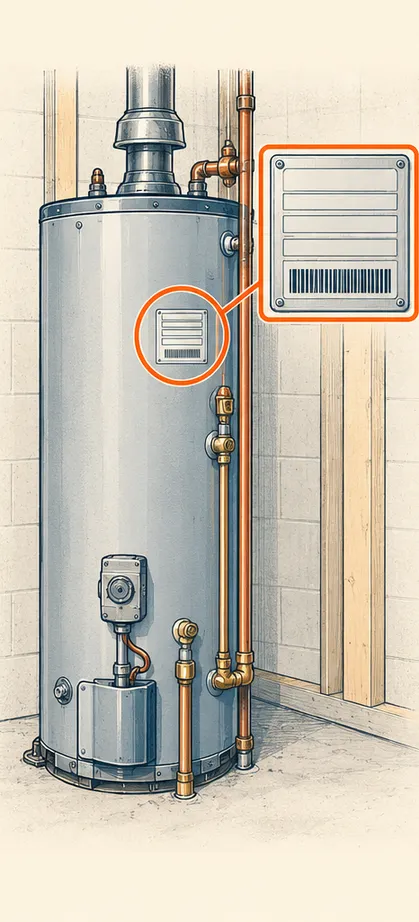
On the rating label on the side of the tank, usually at eye level beside the EnergyGuide sticker. Tankless units carry it on the side or bottom of the cabinet.
Furnace
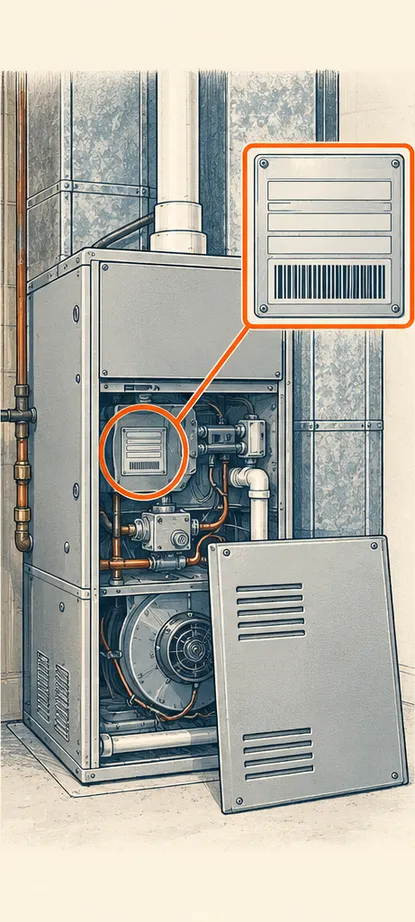
Behind the front access panel, on the inside wall or the blower door. Turn the power off before you open it.
Outdoor AC or heat pump
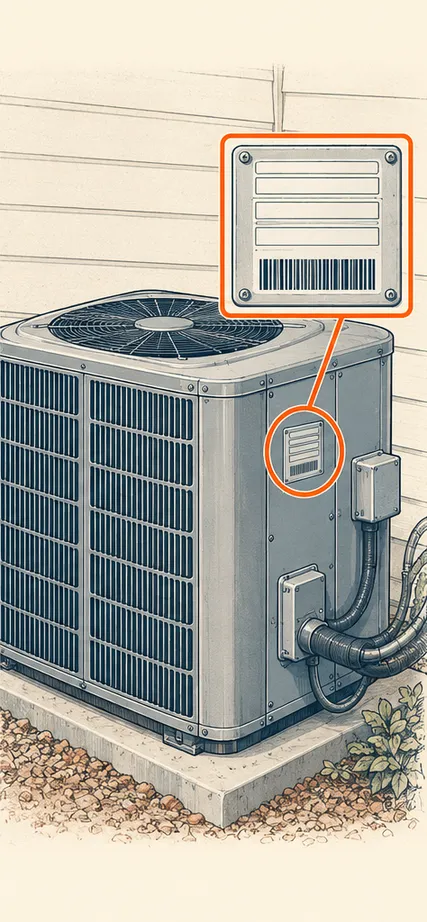
On the data plate on the outdoor unit, usually near where the copper lines and the electrical conduit go in.
Use the line marked Serial No. or S/N, not the model number. If the label prints a manufacture date, that beats any decoded date.
Guides
View all guides →
How to tell how old your water heater is
Find the label, read the serial for your brand, and check the date against the label's other clues.
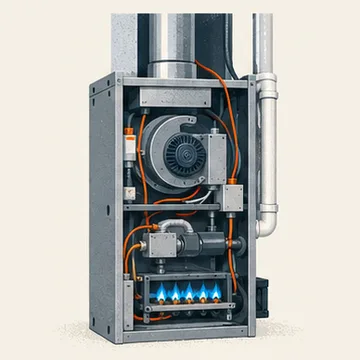
How to tell how old your furnace is
Open the right panel, find the label, and read the date the way your brand writes it.
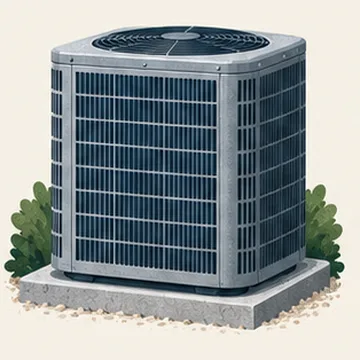
How to tell how old your AC or heat pump is
The outdoor unit's data plate holds the serial, the refrigerant and the efficiency rating. Each one narrows the date.
Signs your water heater is failing
Most symptoms point to a part you can replace. A leak from the tank itself is the one that ends it.
How much does it cost to replace a water heater?
Installed prices from three cost surveys, the extras that push quotes up, and what changed with tax credits in 2026.
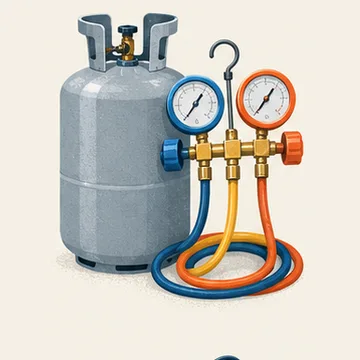
Your old AC uses R-22: what that means now
You can keep running an R-22 system. Every refill just costs more, and a big leak usually ends it.
How the decoder works
Every manufacturer stamps a serial number on the unit's rating label, and most of them build the date into it. The trouble is that each brand does it differently. Carrier puts the week before the year. Goodman puts the year first. Lennox starts with a factory code that looks like a year but isn't. Bradford White uses letters that repeat every 20 years.
This site keeps one table of those rules, 108 serial formats across 53 brands, and each rule went in only after it was checked against published sources such as manufacturer documents, utility programs and home inspector references. When you type a serial, the decoder tests it against every format for the brand you picked and reports each reading that fits. If two formats could both apply, you see both, with a note on how to tell them apart. The full process is in our editorial policy.
The age is measured from the build date to today. The verdict compares that age with a typical lifespan range for that kind of equipment, drawn from the sources listed on each lifespan page.
A worked example
A furnace label reads 0519E28045 and the brand is Carrier.
- Identify the style: week and year, then a letter (mid-1980s to today).
- Apply the rule: The first two digits are the week and the next two are the year. The letter in the fifth spot is a plant code.
- Result: built week 5 of 2019.
- Age as of October 2026: about 7 years old. A furnace typically lasts 15 to 20 years, so the verdict is: no need to replace it on age alone.
What the verdict means
- No need to replace it on age alone. The unit is younger than the low end of its typical range. Repair what breaks.
- In the usual replacement window. It is between the low and high end. Repairs still make sense, but get a replacement price now so a failure doesn't force a rushed choice.
- Past its typical lifespan. It has outlived the usual range. Expensive repairs are rarely worth it at this point, and a tank water heater this old can fail by leaking.
Common questions
Is the serial number the same as the model number?
No. The model number describes what the unit is (size, fuel, efficiency) and is the same on thousands of units. The serial number is unique to your unit and is where makers hide the build date. On most labels the serial is marked Serial No., S/N or Ser.
Why does the decoder sometimes show two or three dates?
Some makers reuse their date letters. Bradford White repeats year letters every 20 years, and older York-family serials every 21. Rather than guess, the decoder shows every date the serial could mean. The tank's condition, the refrigerant type or a date printed elsewhere on the label usually settles it.
Does the serial number tell me when the unit was installed?
No, it tells you when it was built. Most units are installed within a few months of manufacture, but some sit in a warehouse for a year or more. If you need the install date, look for a permit, an invoice or a date written on the unit by the installer.
My serial doesn't match any pattern. What now?
Check that you copied the serial and not the model number, and that the brand is right; many units are made by a different company than the name on the front. If the label prints a manufacture date, use that. Otherwise the maker can date the unit from the full serial.
Do you store the serial numbers I type?
No. The decoder runs in your browser and nothing you type is sent to this site.
How accurate is the replace-or-not verdict?
It compares the age with a typical lifespan range from published sources. It is a planning guide, not an inspection. Leaks, rust, a cracked heat exchanger or repeated repairs matter more than the number.
Keep a record of your home
The age you just looked up is the kind of fact that gets lost. A written record of serial numbers, install dates, repairs and who did the work saves the next owner, inspector or insurer from guessing.

Keep This With the House
A lifetime logbook for the house, organized by system, with room for serial numbers, install dates, repairs and contractors.

The House Has Old Pipes
Galvanized, polybutylene, cast iron and the sewer line: what fails, what it costs and how to decide.

The House Is Fifty Years Old
A buyer's guide to older homes: wiring, pipes, lead, asbestos, insurance refusals and what the repairs cost.
Book links are Amazon affiliate links.